
Tetelestai
Our debt is paid in full

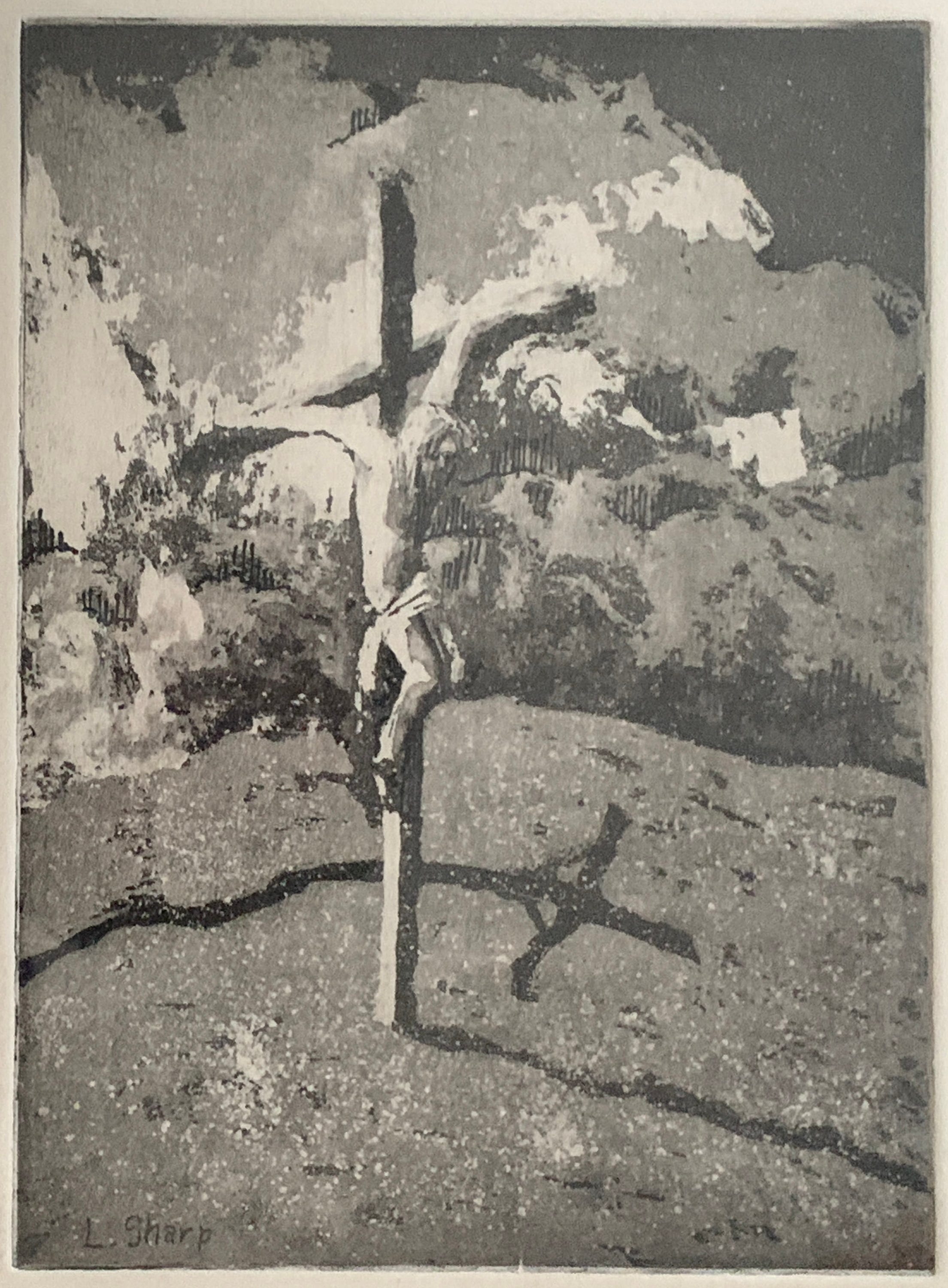
Why do we call the Friday before Easter “Good Friday”? All have abandoned Jesus on Friday morning. Even Peter is no longer a witness of the horrors to come. After declaring Him guilty of the heresy of claiming to be God, Jesus is escorted from the Sanhedrin to the Romans who rule over them to decide His fate. A crowd follows the temple guard to the Pratoreum. Now Pontius Pilate will judge their case.
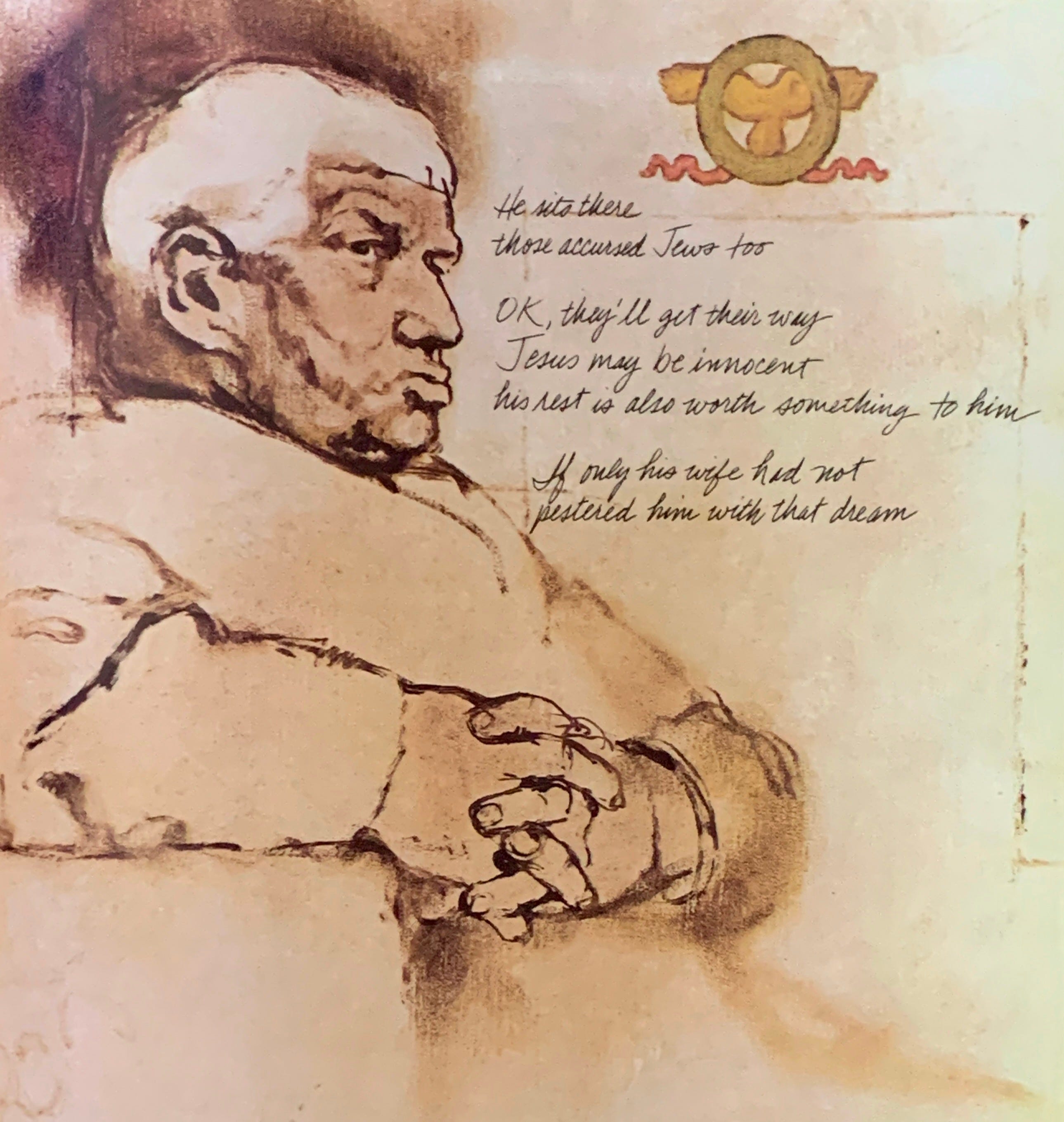
It's a religious matter. Pilot defers the case to King Herod, who is merely curious and bounces Jesus back to Pilot without an opinion. Along the journey through Jerusalem's streets, a larger crowd gathers — including people merely looking for entertainment. The religious leaders incite this crowd. They have plotted for His death as a blasphemer for weeks now. Pilot is unwilling to overrule the mob’s riotous verdict: execution — and tries one last alternative.
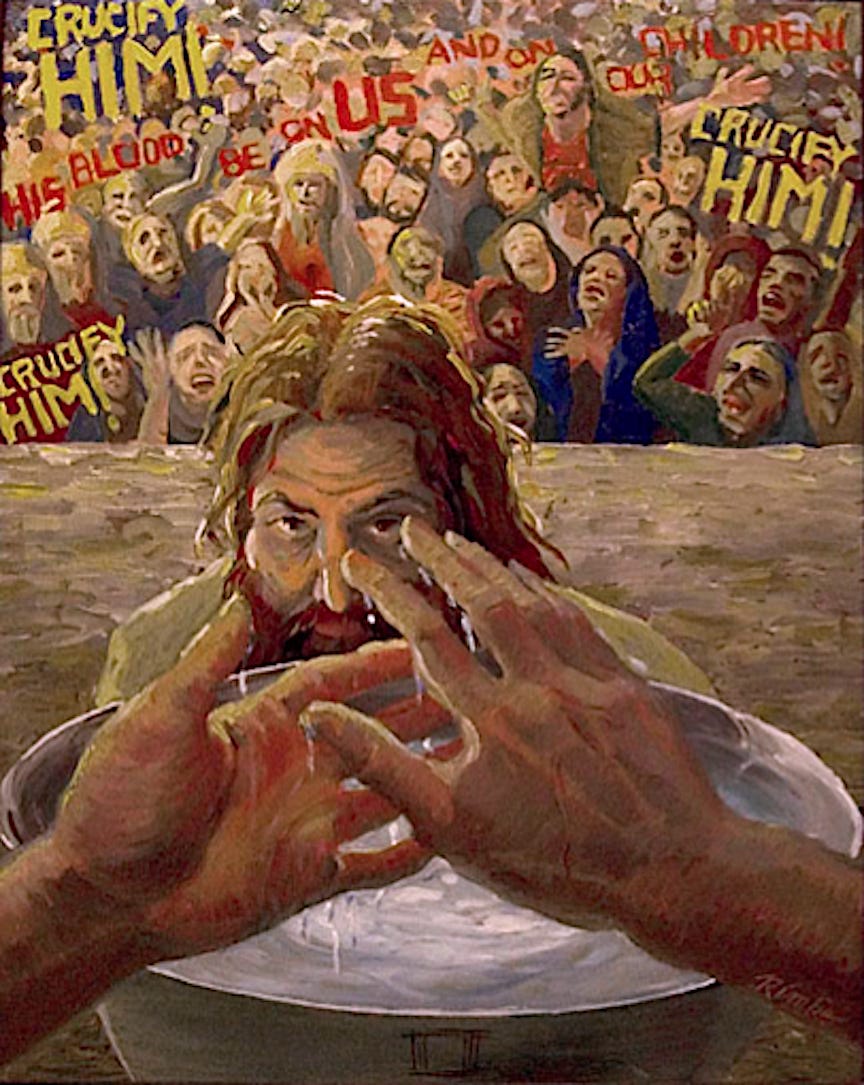
He orders Jesus whipped. Maybe that will satisfy their blood thirst. He washes his hands of the matter, choosing to look the other way.
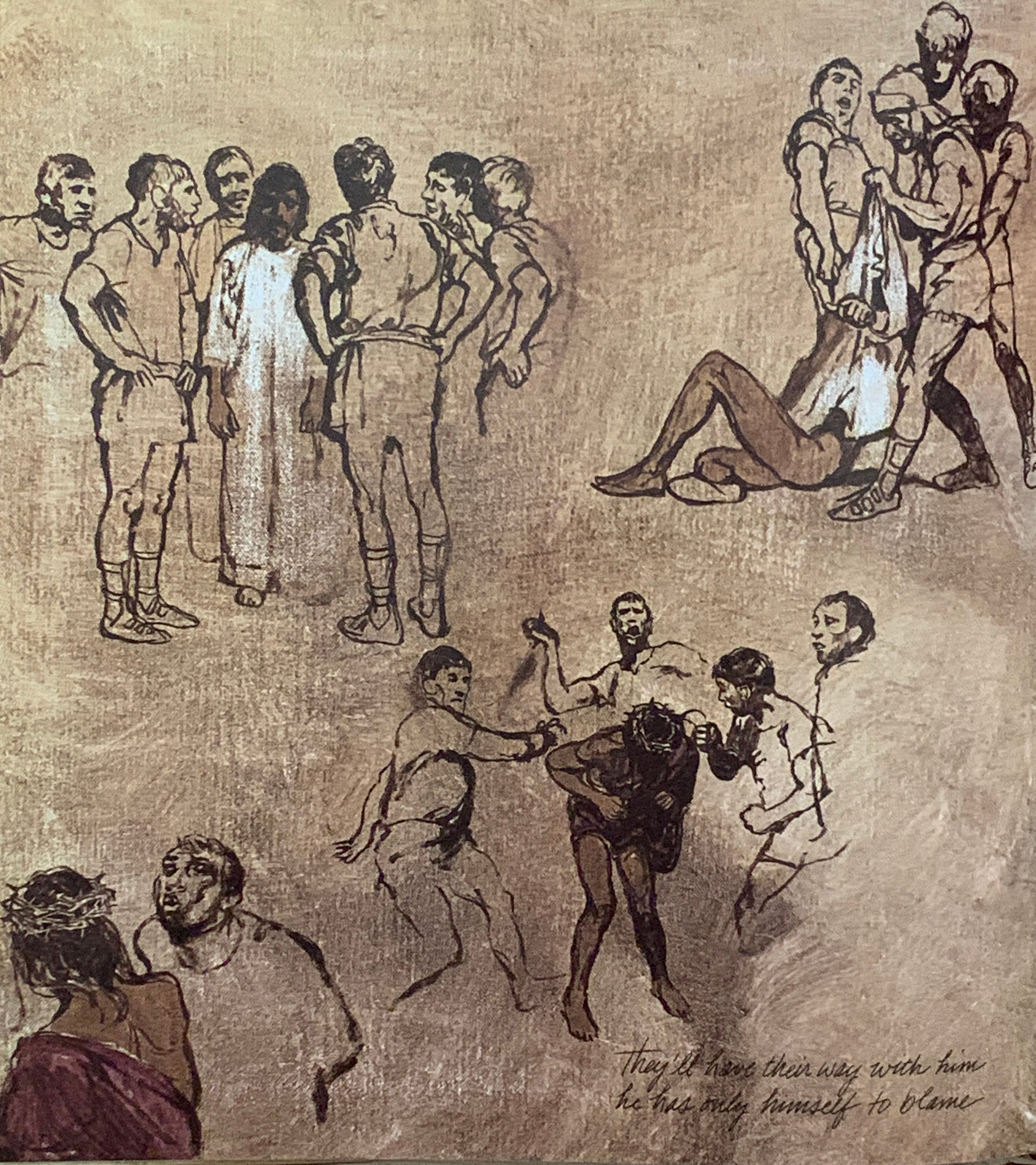
Jesus is taken into a side court, mocked as a king and flogged with a Roman flagellum 39 times. His back is a mass of deep cuts and gouges. He bleeds. The “royal robe” sticks to His coagulated open wounds.
I cannot depict this torture without making it into a cartoon. I turned instead to the Shroud of Turin, which has etched evidence of similar treatment: a back lacerated by flogging and thorn wounds and an actual thorn, identified as rhamnus lycioides, Mediterranean Buckthorn
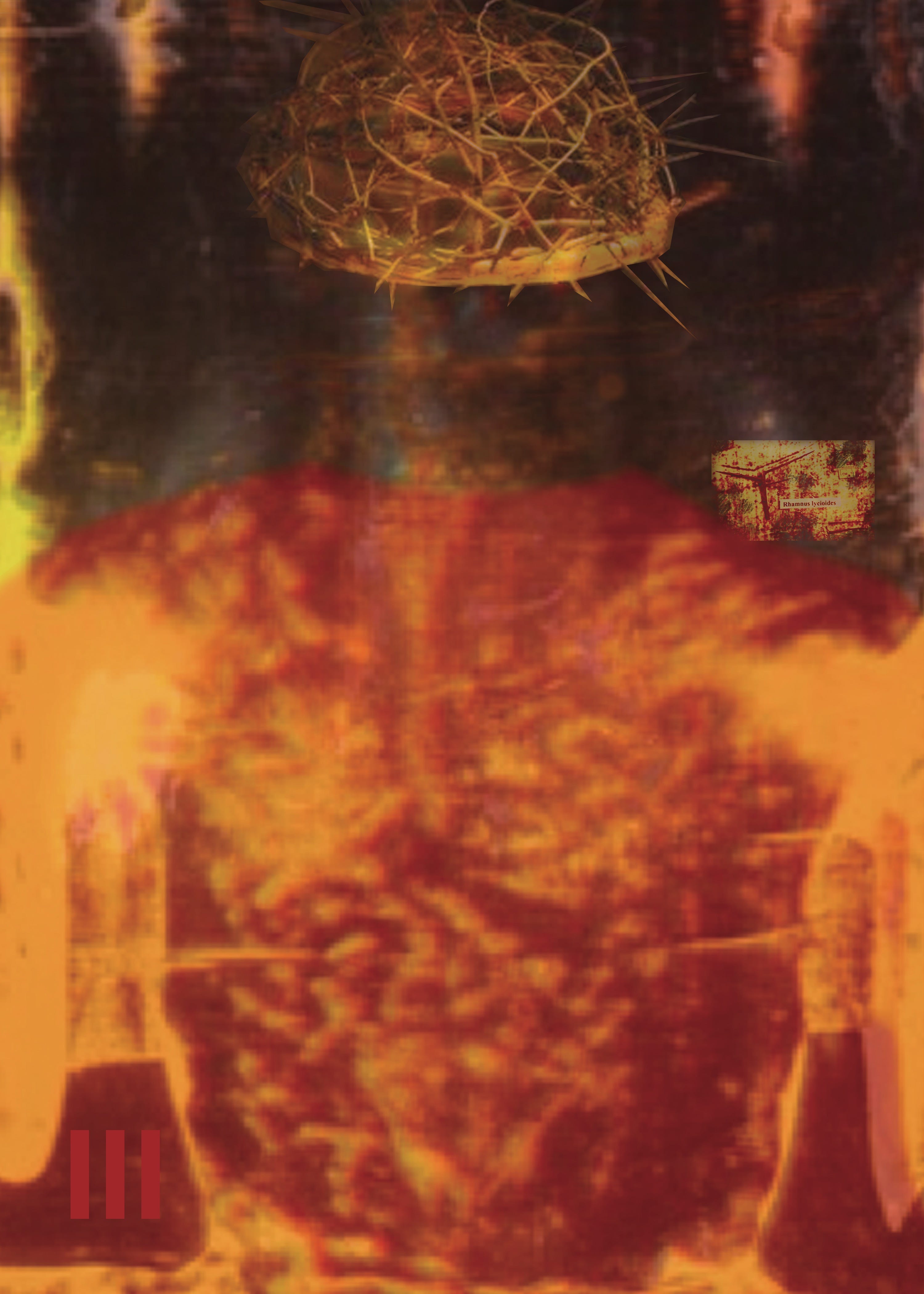
Crowned, bleeding, and dressed in a mock royal robe, Jesus is returned to the Praetorium. The growing mob now thirsts for blood, still insisting on public execution by crucifixion. Jesus is now forced to carry His own cross to Golgatha, the place of execution, a hill of death called “The Skull.”
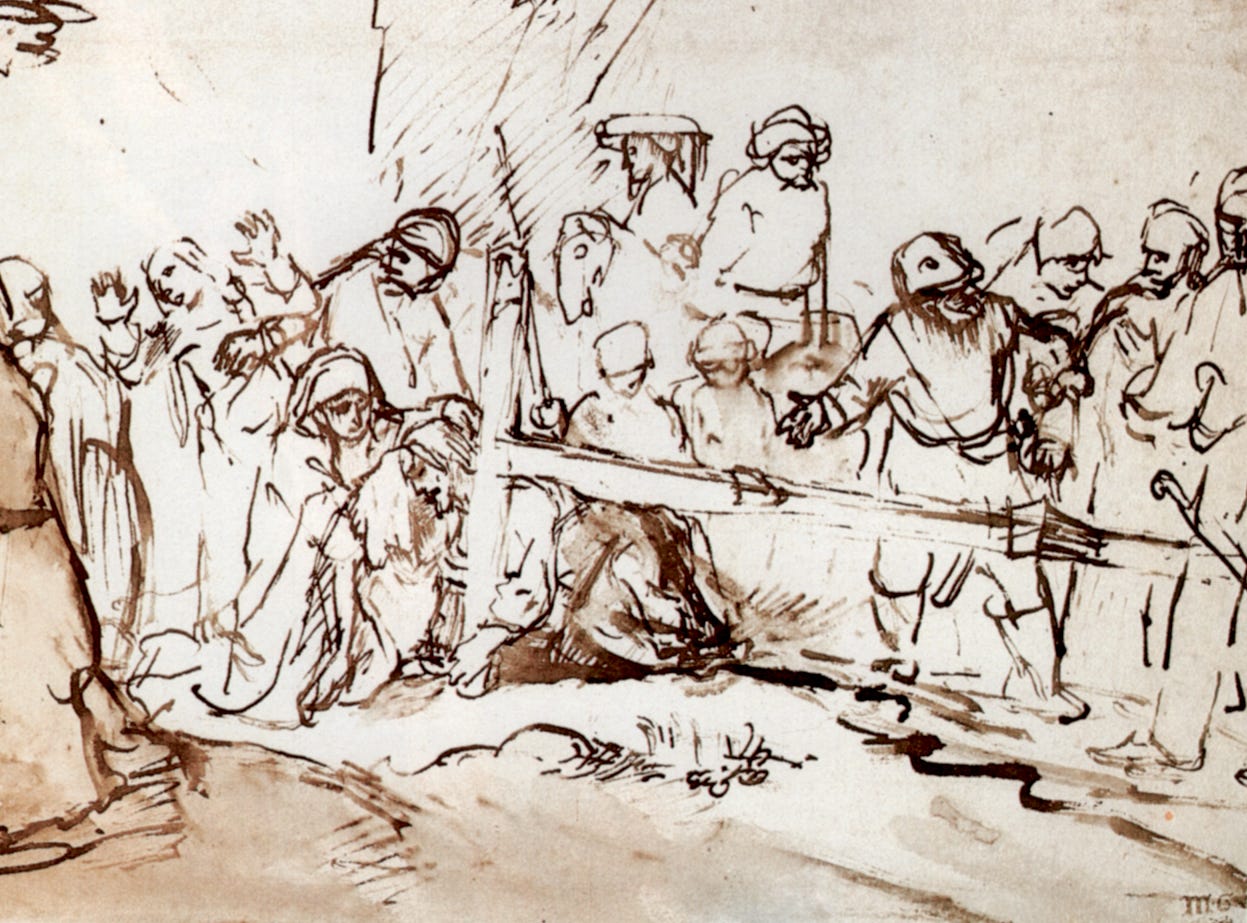
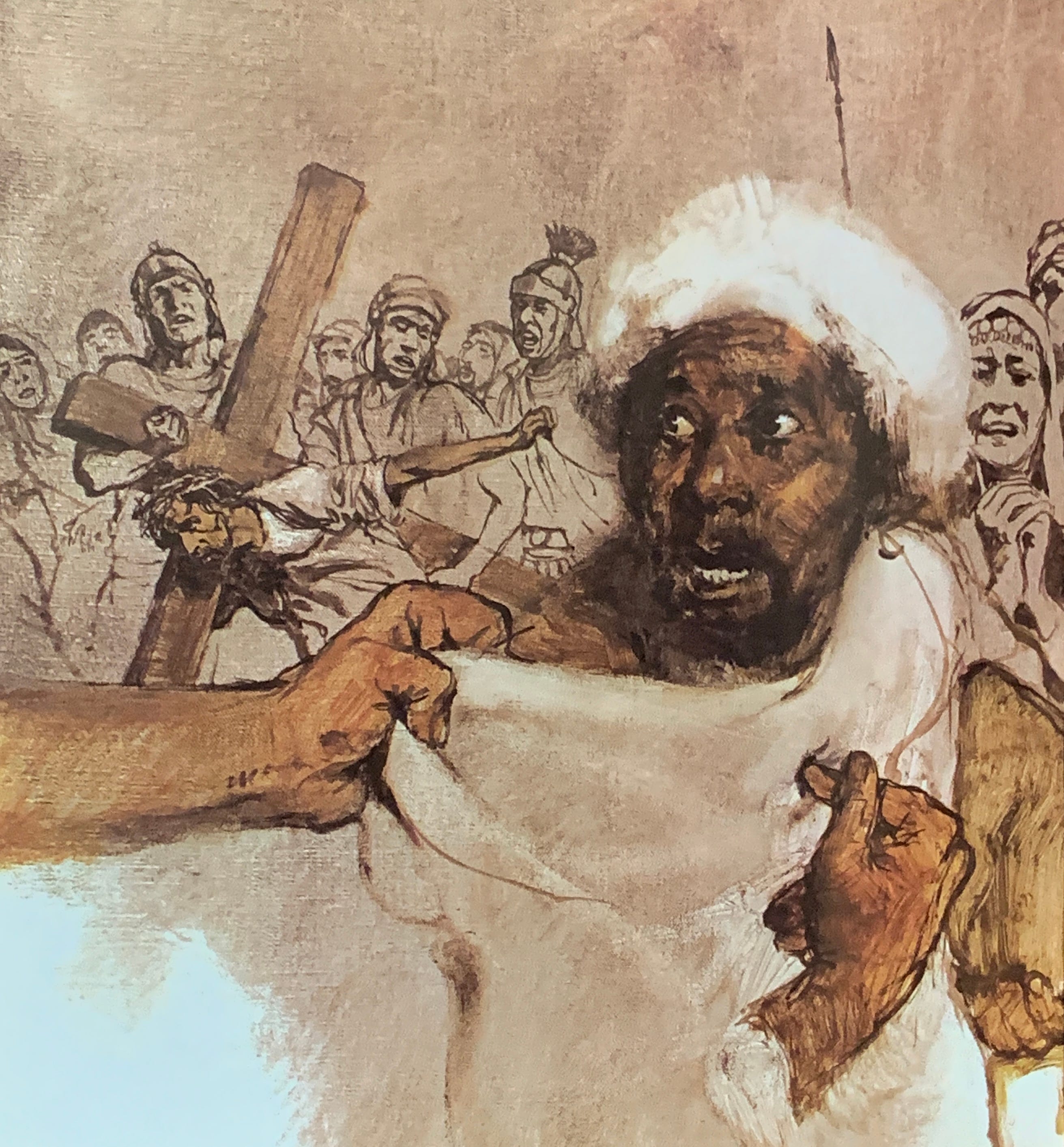
Jesus is already half-dead from the 39 lashes, and flounders, unable to rise and bear the weight. The Roman soldiers pull out a bystander, Simon of Cyrene, to do the job. (Simon later comes to faith.)
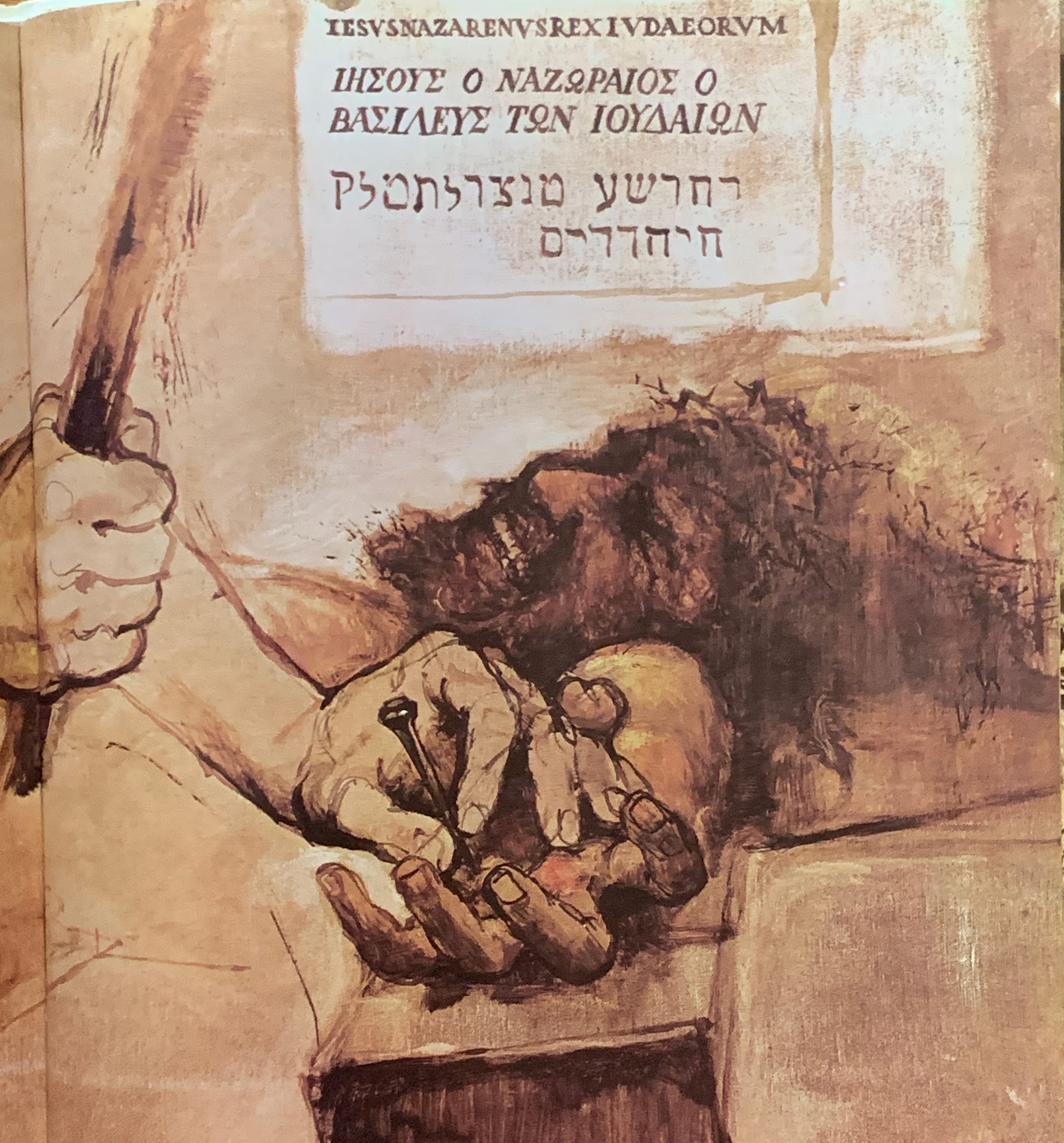
At Golgatha, the iron spikes are driven through Jesus wrist bones and nerves, and through the metatarsals of His feet.
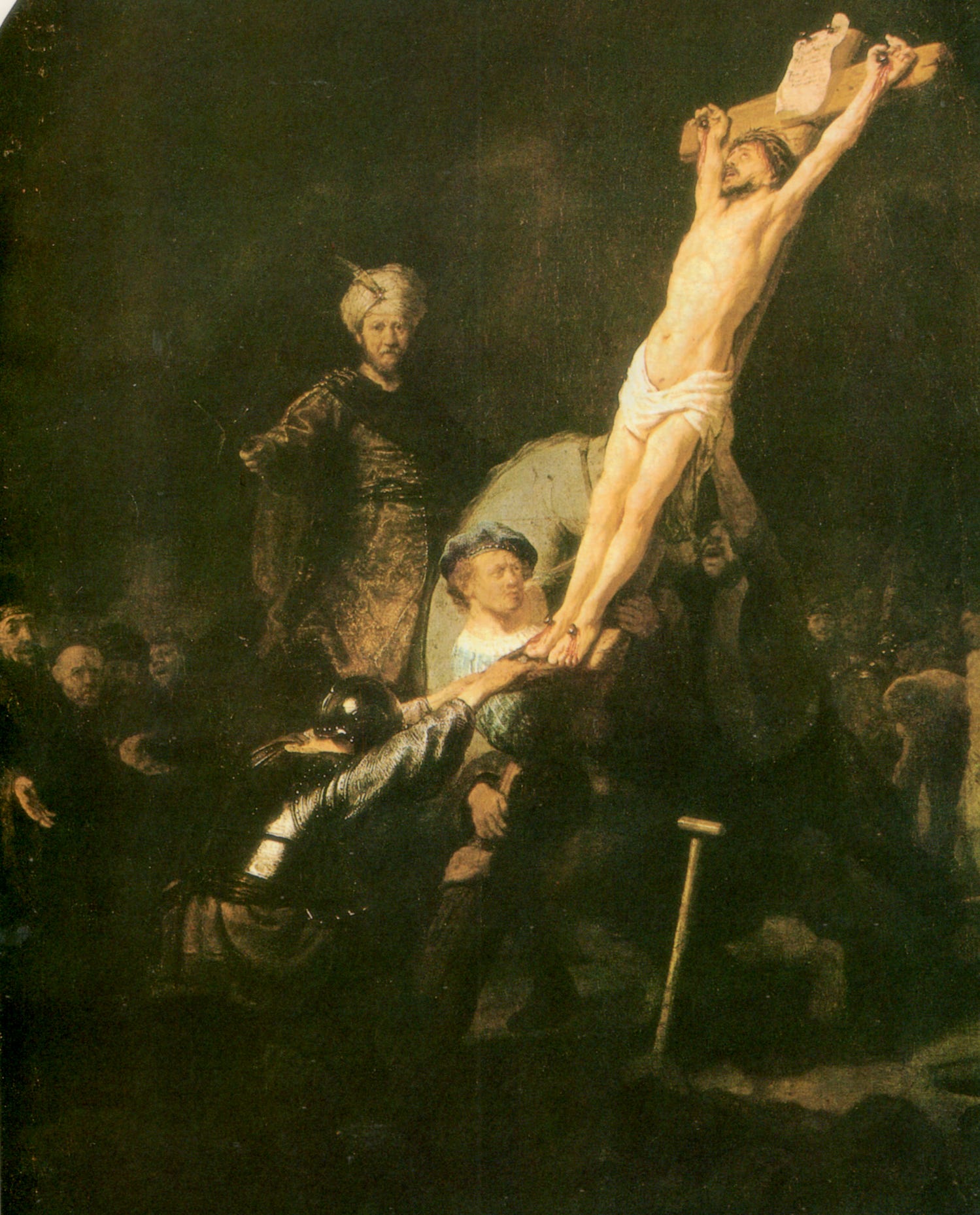
Rembrandt paints himself twice in the act of hoisting Jesus’ cross in place. Indeed, every true believer rightly places himself alongside those who nailed Him there.
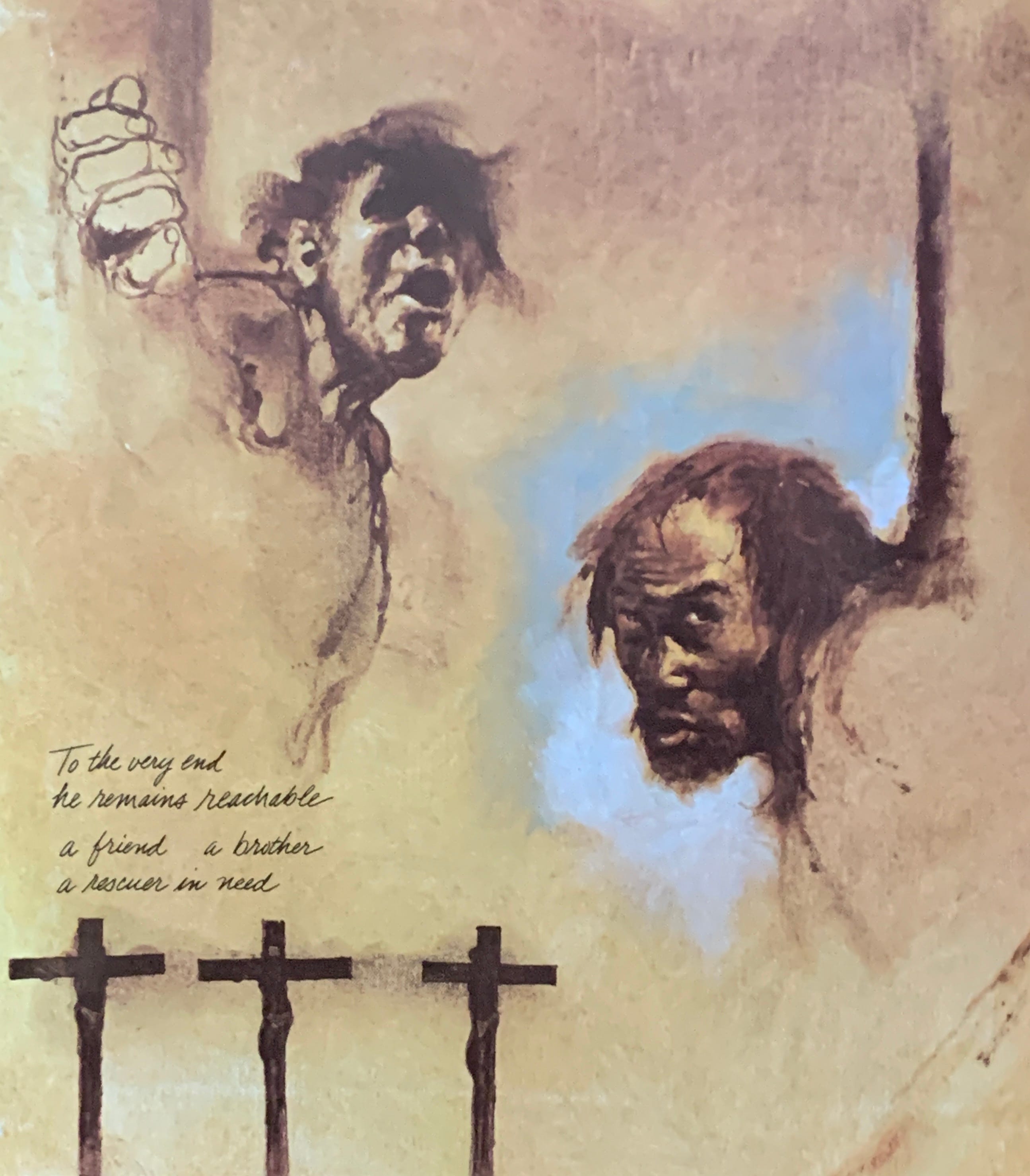
There are two murderers and thieves hanging on either side of Jesus. They mock Him, yet one softens and believes. Jesus promises “This day you will join Me in paradise.” He is the first believer to enter that better place.
Soon enough, His Father turns His face away. The mounting darkness is both physical and otherworldly. The weight of our atonement falls on Jesus, claiming His life. Jesus cries out in heartbreak, “my God my God, why have You forsaken me?”
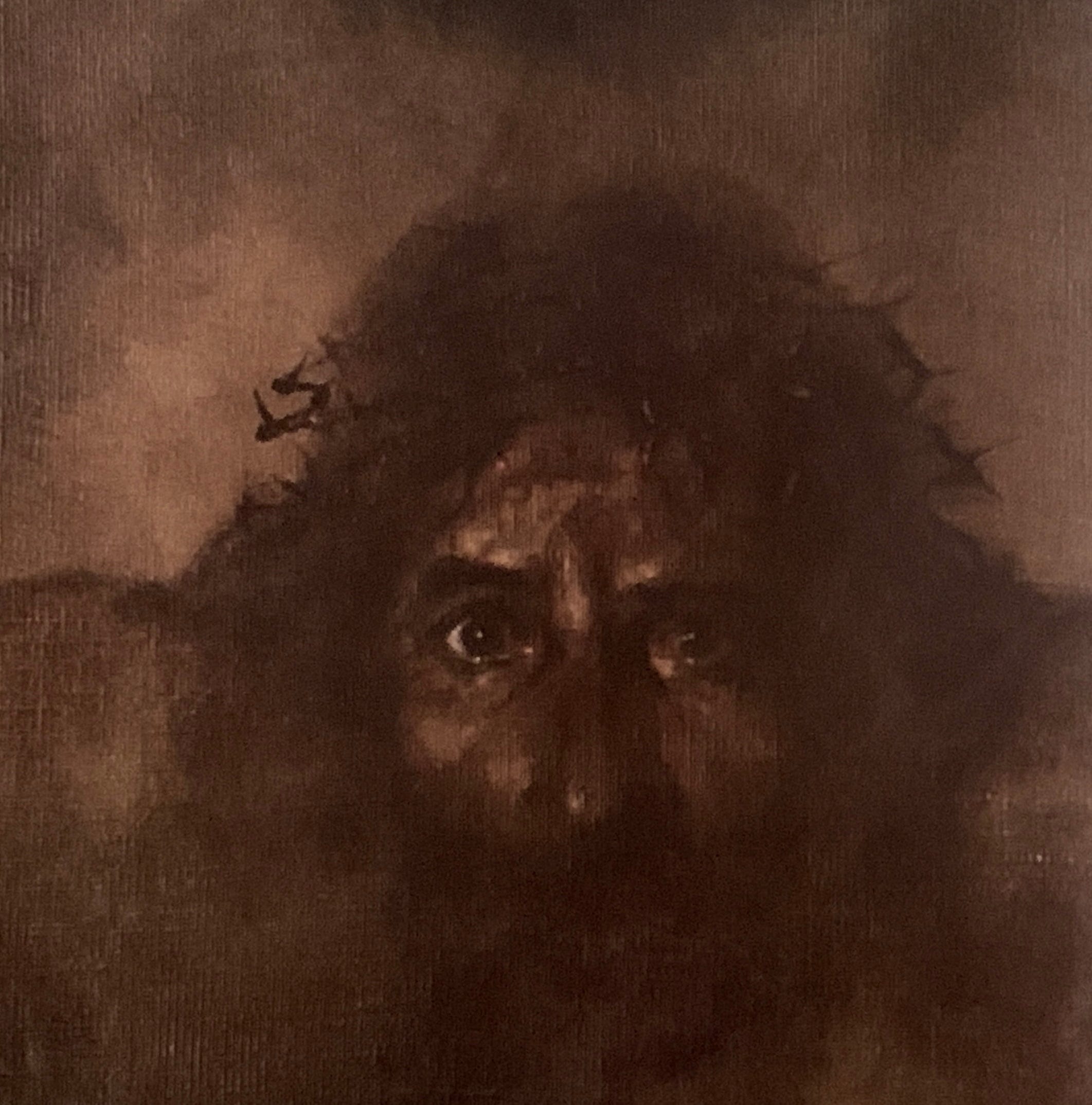
Then, having borne our punishment, through cracked lips Jesus wheezes "I thirst …"
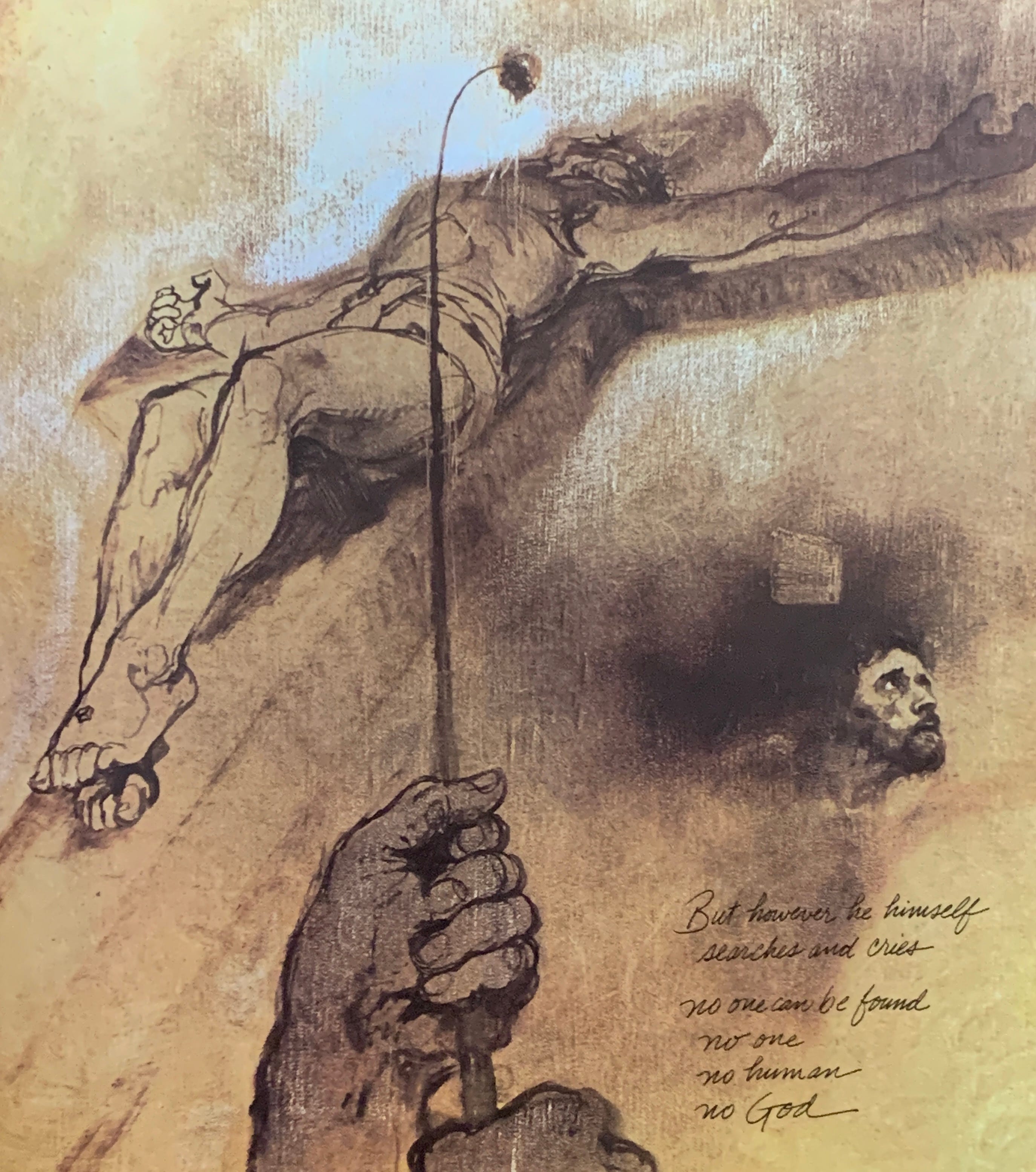
He samples the mix of vinegar from a sponge and draws a final breath, and breathes out "Tetelestai"— a Greek term commonly used when a debt is paid in full.1
The soldiers test the body — death usually takes longer … many hours more, maybe days. A spear is driven in His side. A mixture of blood and water pour out, a sure sign of heart failure and death. The soldiers remove His broken body. Friends carry it away.
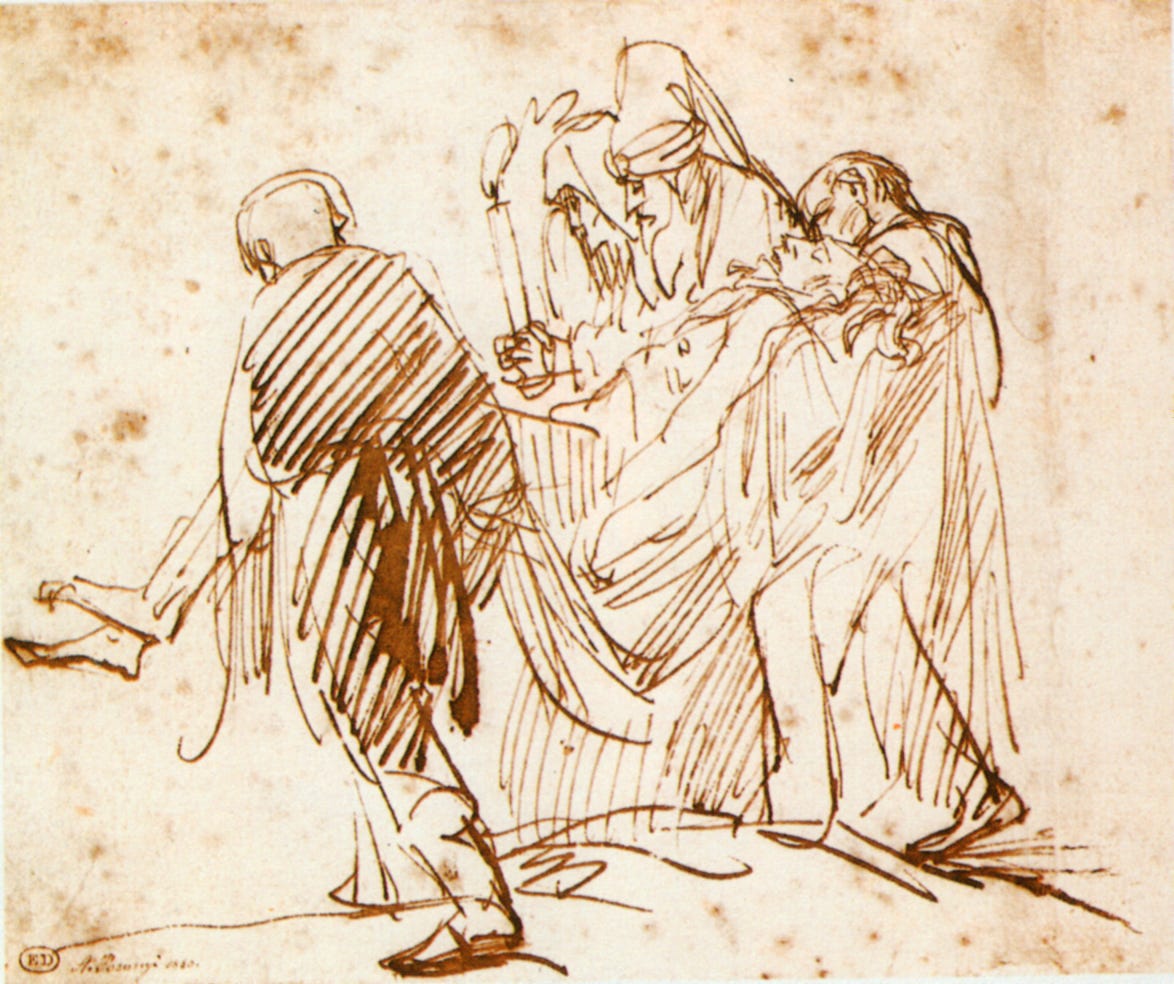
He is carried to a tomb owned by Joseph of Arimathea, the Pharisee who came to Jesus earlier, late at night seeking answers surrounding His miracles. (John 3:1-21)
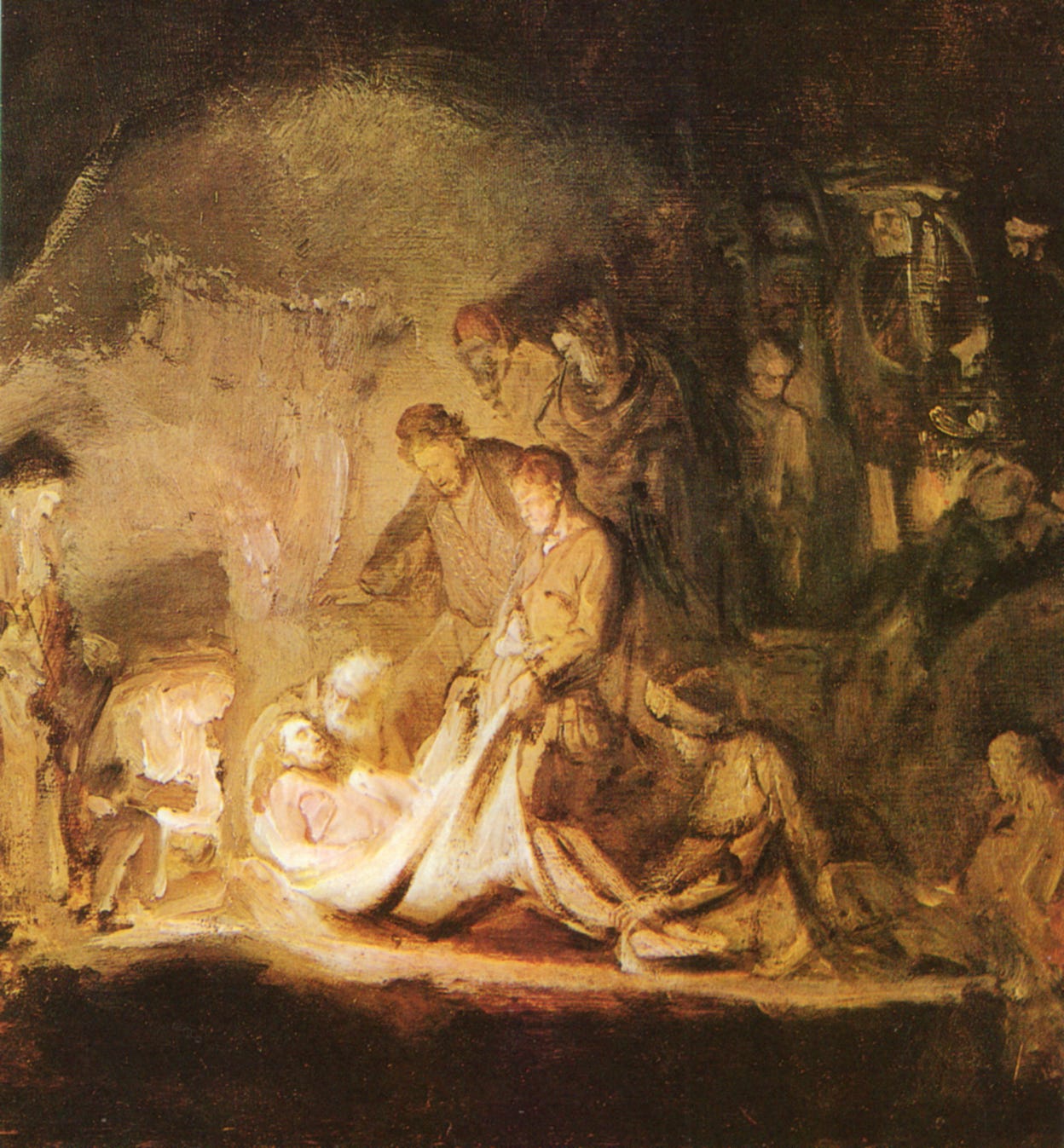
It is now sunset, Friday is officially over. The Sabbath has begun. They wrap and anoint His body as best they can. No one will be able to finish the embalming until after sunrise on Sunday. What will they find?
___________________________
Rein Poortvliet (1932-1995) modeled his art after the Dutch masters of the 16th century such as Rembrandt, daily drawing and painting from life and the common things all around. Although best known for his Gnome series (artists have to make a living somehow) his heart was with real people and matters of faith. He sketched friends and relatives, animals and plants as he found them in the Dutch county side in The Farm Book and for Noah’s Ark, gaining the amazing artistic vocabulary of human expression you see in these images, which I photographed from He Was One of Us, where Jesus is not pictured, but understood by the reactions of those friends and enemies He encountered.
It is Good Friday, and Sunday is coming!
https://bible.org/question/what-does-greek-word-tetelestai-mean
Especially liked the Lynda R depiction of Jesus before Pilate. Also like Rein P's many graphic images.
Our debt, the one we reluctantly admit, is paid in full.