
This August, History Became Real
In which I instigate a family reunion to explore our migrant refugee roots.

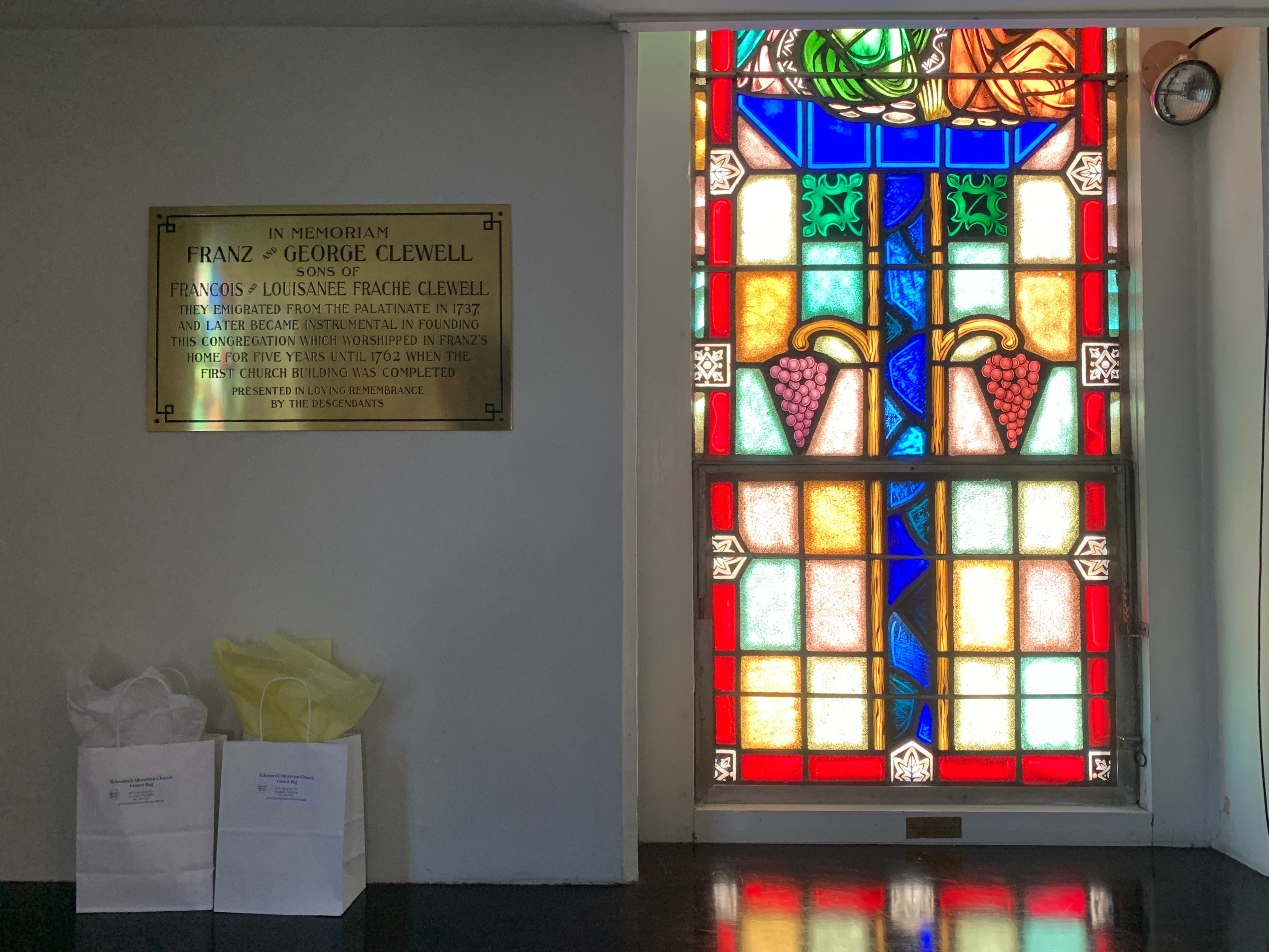
Little did I know a family reunion with cousins and distant relations was such a deep need. Isn’t the idea of honoring family connections routinely disdained as painful and pointless every Thanksgiving and Christmas? And yet, our deepest human connections are to those who share genetic and micro-cultural and even spiritual roots, who share in common the unique wiring that make us into who we truly are — mind, body and spirit.
This level of deep-rooted multi-generational connection has been missing for over a century. It began to shallow out when sons and daughters left farms, villages and small towns for work in industrial cities, marry and have children in new locations in suburbia at the turn of the last century. The nuclear family concept became mainstream after WW2 for roughly 30 years. Then, over half of marriages began to fail, and with those marriages, the two-parent nuclear family. A single-parent home is now mainstream with perhaps deeper connections to the grandparents willing to step in and help raise their grandchildren. Fathers are often missing.
Ancestry as Hobby
Many instinctively look to the past and want to know more about their roots. The ability to research ancestry blossomed with the internet, and in our family, a cousin and two second cousins and I occasionally tumbled down the ancestry rabbit hole. In the early 2000s we discovered that the old 1907 print copy of the family line our mothers and aunts talked about was online at archive.com. I was soon hooked by the history; so much refugee drama, courage and perseverance — they were French Huguenots who fled from religious genocide, first to Geneva, then to “The Palatinate” (now western Germany) and finally to Holland to sail to America.
From Genocide in France to Turmoil in America
Both Francois and his wife, Louisa, were born ten years after the flight of the Huguenots provoked by the Revocation of the Edict of Nantes in 1685. Their families eventually resettled in the Palatinate, now western Germany, and Francois and Louisa grew up, met and married there at age 23; however Francois died when their two boys were still young. Louisa, impoverished as all Huguenot refugees were at that time, soon remarried a very loving second husband who raised the boys while working to release the family from bondage as serfs. This was accomplished with a “the Pass”. Within two years, they left for Holland and the New World.
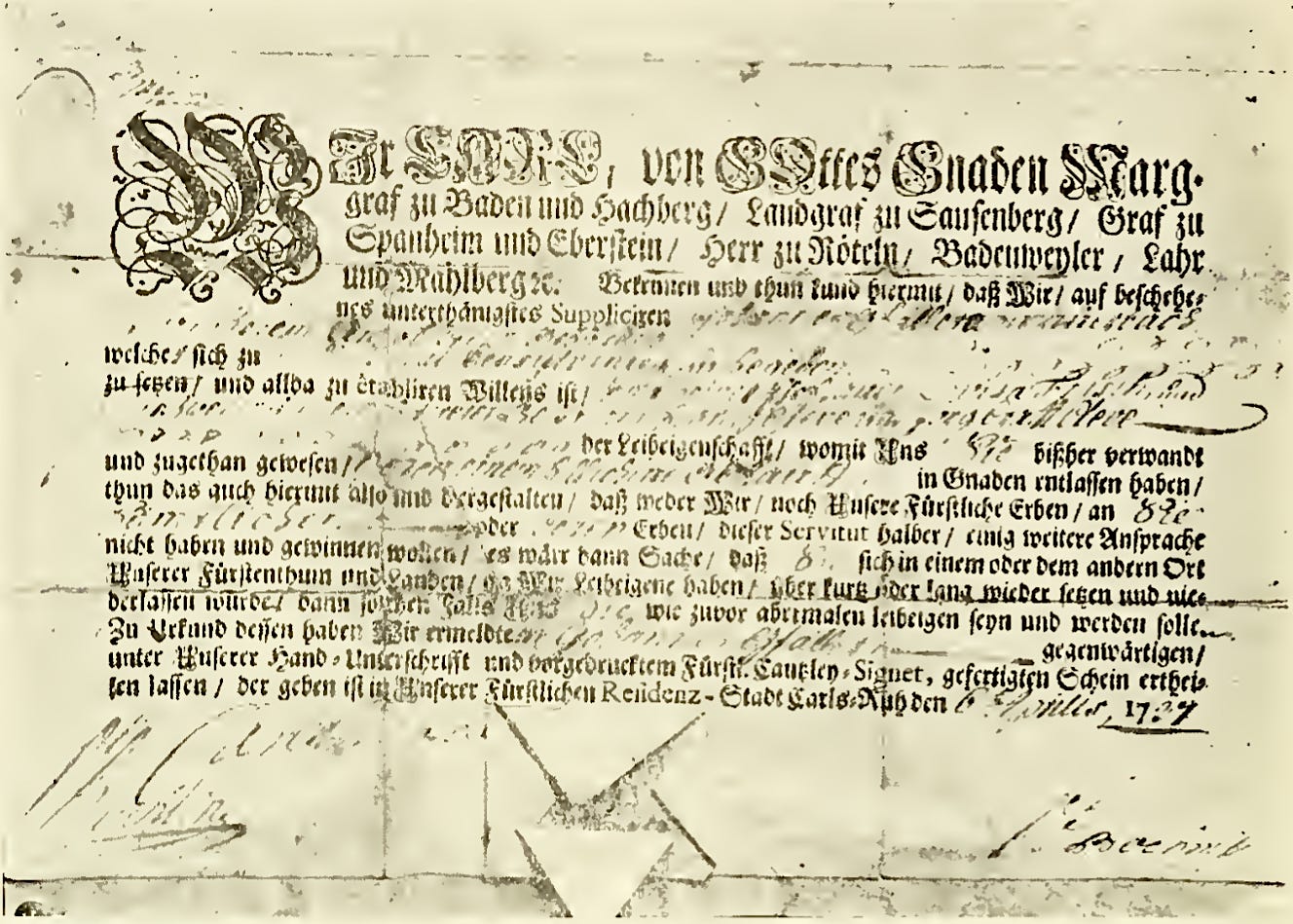
The flight of the Huguenots was an emigration of the same scale as the Irish when the potato famine hit 120 years later. Our ancestors boarded a sailing ship in September, and endured “storm after storm.” Somehow, Louisa’s second husband and the boys beloved step-father was “lost at sea.”
From Serfs to Indentured Servants
The new widow and sons landed in Philadelphia in October of 1737. Frantz was 17 and Georg was 10. Both boys were immediately sold at auction, indentured to work for five years to pay for the passage of the family. Frantz was able to work near Louisa in a farm community, but George was left behind to work in Philadelphia because he was “too young” to be a farm hand. Indeed, he was too young to be indentured at all, but someone had to earn the passages his step father could not.
That boy was my 9x great-grandfather, almost orphaned, commissioned to make buttons in a button factory until age 15. In parting, Louisa admonished him to cling to the Lord and this he did, undoubtedly crying at night into his pillow, if he even had a pillow in whatever rude boarding house he called home at night for five long years.
His brother, Frantz, wrote
On our arrival in the vessel, my dear mother handed me over to my future master, and she begged him earnestly to see to it, that I attended church regularly, as well as attend to my private devotions and admonished me to continue in the fear of the Lord and trust his aid and assistance.
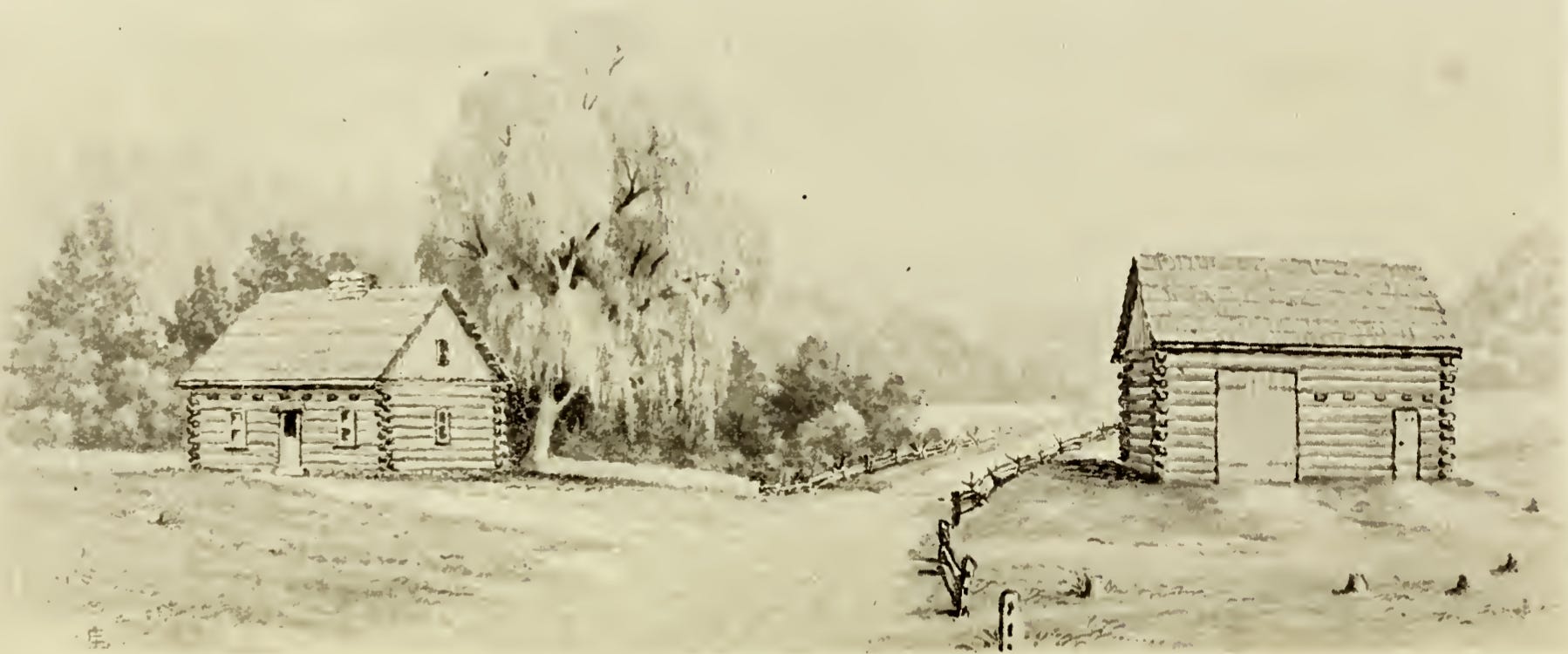
Somehow, Georg learned to write with an elegant hand, and grew an interest in surgery. At 15, when he had paid off the ship’s fare and was released to join his family, he had saved enough extra wages to eventually buy 40 acres of land adjacent to his brother’s homestead. There, he built a log cabin of his own, far out in the woods to the west, closer to where the displaced Native American Delaware and the Iroquois tribes lived.
The Walking Purchase
A section of land “the size of Rhode Island” had been taken from the Delaware in eastern Pennsylvania in the infamous “Walking Purchase” two weeks before our ancestors landed in Philadelphia. I imagine the motivation of William Penn’s devious sons was to populate the Lehigh Valley with the tens of thousands of French, Dutch and German speaking migrants who were flooding the English Quaker city of Philadelphia. They “found” a dubious 50-year-old unsigned “treaty” which the Delaware honored, to sell a piece of land “the distance a man could walk in a day and a half”. The English Quakers instead cut a trail and hired three marathon runners, who covered a distance of over 60 miles.
The lost land was undoubtedly cursed by those forced to leave, and those who settled it had to flee for their lives during many “uprisings.” My ancestors were refugees finding refuge, yet suffered the wrath of others who had unjustly become refugees.
Georg must have had a heart for the natives that were driven out, because he became a trader and the family history includes this exchange of between him and his brother:
On several occasions his brother intended to give him his fraternal advice in regard to the best methods of farming, etc., to which he made reply: “You farm as you like best; I prefer to trade with the Indians; that pays better than the best of farming.”
There is also an account of a tooth extraction:
Tradition has it that at one time a big stalwart Indian came to him with a toothache while out upon his fields, and, sending for his hook with which he extracted the teeth, he told the Indian to sit upon a stump and then and there performed the operation while the Indian screamed for pain. Thus it may be noted that George was more a man of affairs which trait, no doubt, was largely acquired during his youthful days which he spent in the city as a redemptioner.
But with all his intercourse with the Indians which would make it seem possible to securely gain the friendship of the Indians, he considered himself a common foe in the time of insurrections. He and his family were among the refugees on several occasions at the Rose Inn about a mile north of Nazareth, and, during the insurrection of 1755, they had fled to the Whitfield House, Nazareth, where his son, Daniel, was born.
Somehow, the brothers and their wives had plenty of spare time to make babies — 21 in all! My family is descended from Georg’s 10th child.
And they also honored the Sabbath every Sunday, house-church style, until they invited a minister from a nearby “closed” Moravian settlement in Nazereth to come and preach and pastor them, even though they were of differing denominations. In a letter I later discovered in the church history, they stated plainly
“We have received your letter and from it perceived your care for us and we accept it with gratitude. Since you present the matter so tenderly by not seeking to make us your own as far as denomination is concerned … we are impartial for we are of different denominations for Georg is Lutheran and Franz is Reformed, and both wives are however married Lutheran. And thus we live together without contradiction in denomination. As long as we have Grace in our hearts we believe and hope to become blessed only and alone in the merit and suffering of Jesus.”
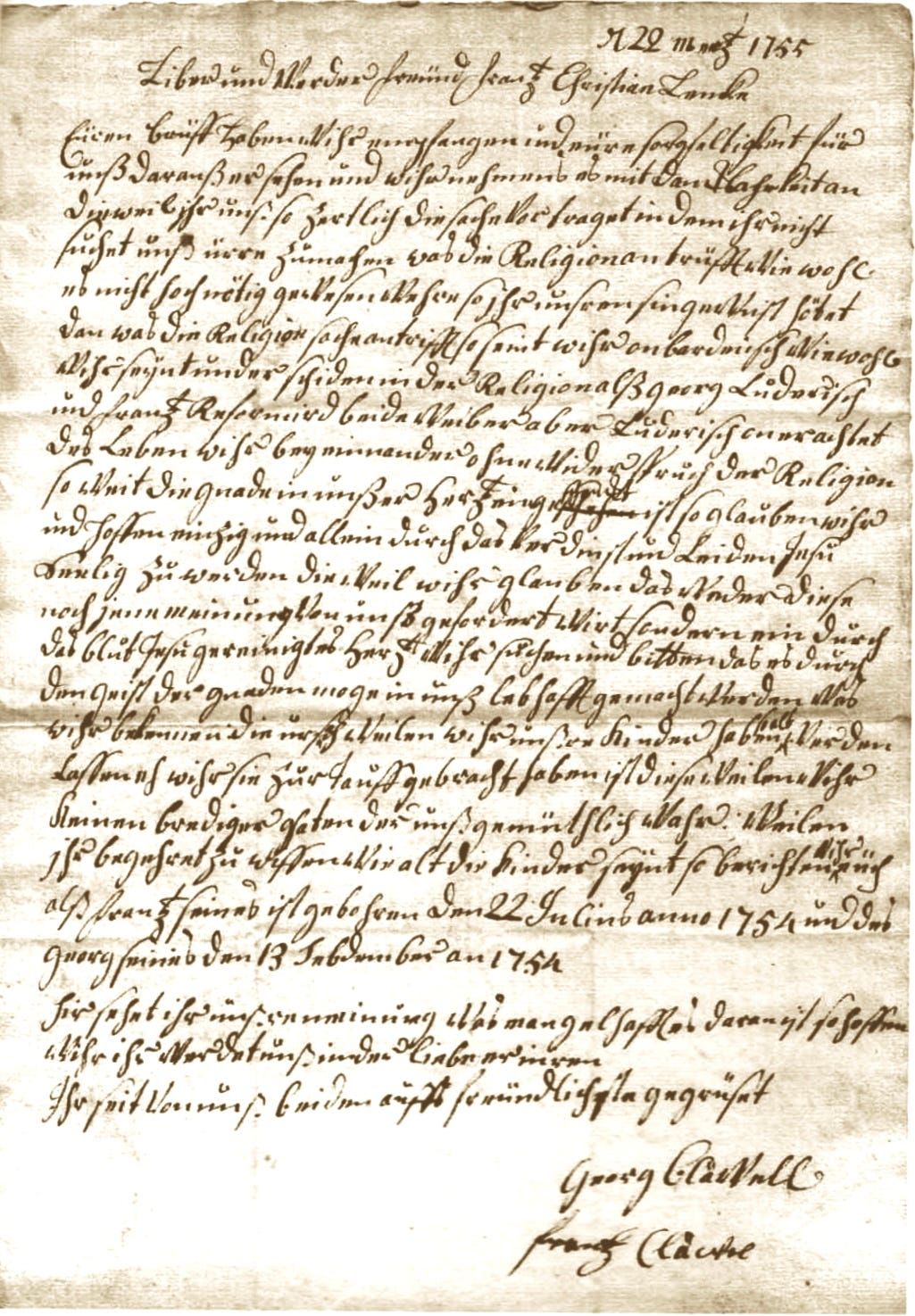
I wish the leaders of our many Christian denominations would have a similar focus on what really matters: “to become blessed only and alone in the merit and suffering of Jesus.” Theirs was not watered down, but essential Christianity. The Moravians had their doctrinal quirks, but to my ancestors, those quirks, like “casting lots” for membership were endured with patience. George had to draw multiple lots over a number of years before he could take communion. It wasn’t an injustice he chose to “murmer against”.
I grew up in the area where the Delaware clans resettled along the Tuscarawas River in Ohio. The Moravians sent missionaries out to the Delaware in their new locations. One Moravian settlement, Schoenbrunn, was a destination of elementary school field trips almost yearly. The village was laid out German style, and the Delaware who came to faith had to adapt to foreign ways of community living and the same odd rules and doctrines were applied. Most modern missions efforts are now more culturally sensitive. Regrettably most doctrinal differences are still promoted.
Brother Georg and Brother David
After I discovered my ancestors’ Moravian connections, I began to research the writings of David Zeisburger, the Moravian missionary who pioneered Schoenbrunn and four other settlements along the Tuscarawas. One of these settlements, Gnadenhutton, suffered a total massacre when “the Long Knives” from Virginia mistook the Christian Delaware for a village that had sent warriors to massacre school children in western Pennsylvania. Ninety Christian Delaware lost their lives.
All this devastating news undoubtedly reached my great 9x grandfather back east. It seems likely he had befriended David Zeisburger when he was living nearby, reaching out to the Iroquis, before he moved to Ohio. Georg may have supported the Ohio mission communities with prayers and funds. These Moravian “brothers” each spoke multiple languages: French, English, German, Algonquin and Iroquois and were truly cross-cultural in their shared outlook.
Making it real
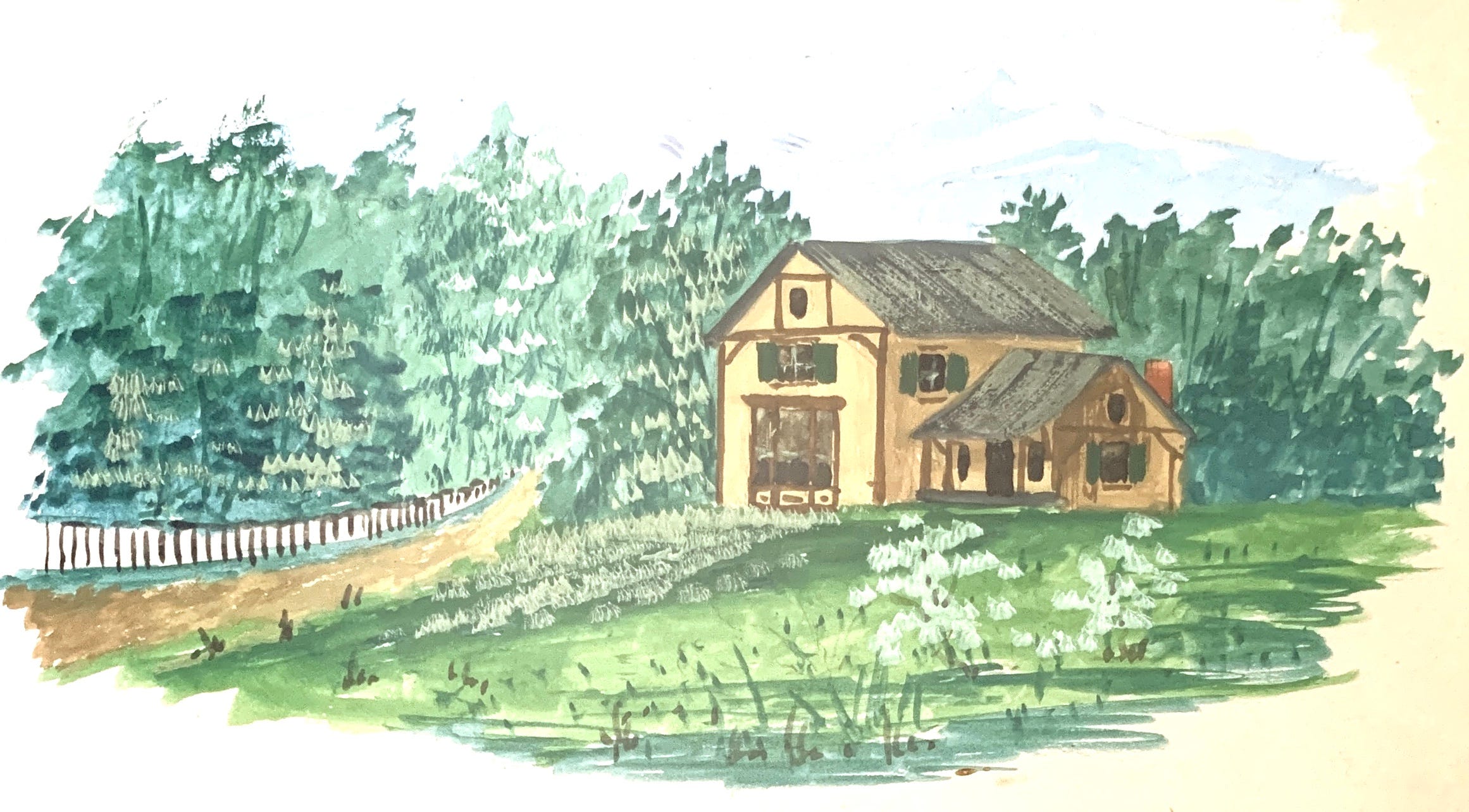
I have a watercolor painting by my great-great-great grandfather of his great-great-great grandfather Georg’s homestead, as it looked in the early 1900s. The scene has been calling to me, so it has been on my “bucket list” to visit my ancestors’ graves and area of re-settlement. I tried about 20 years ago, but I had lost an email connection to the family reunions still being held, the very same reunions which my great grandmother had attended 121 years before.
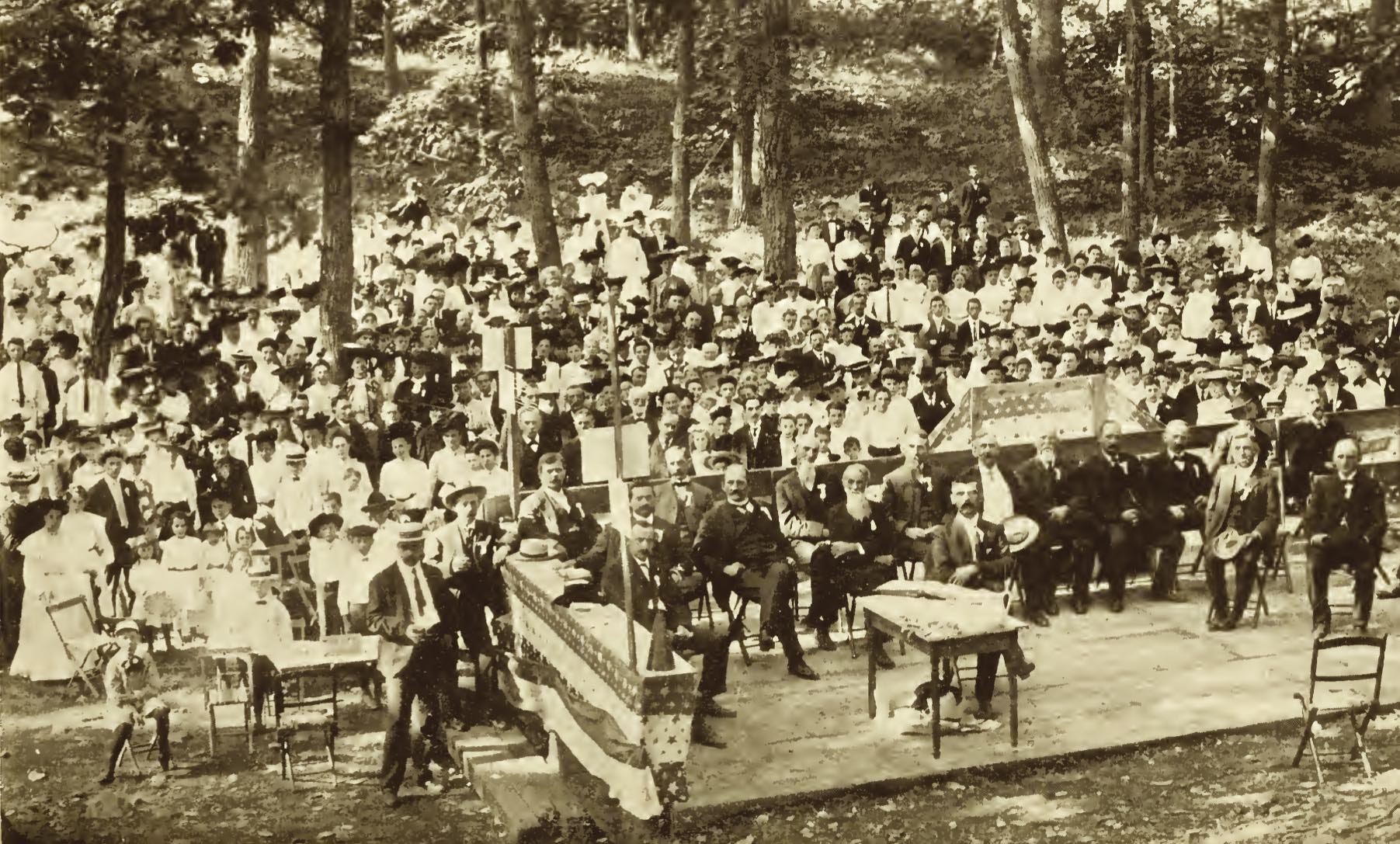
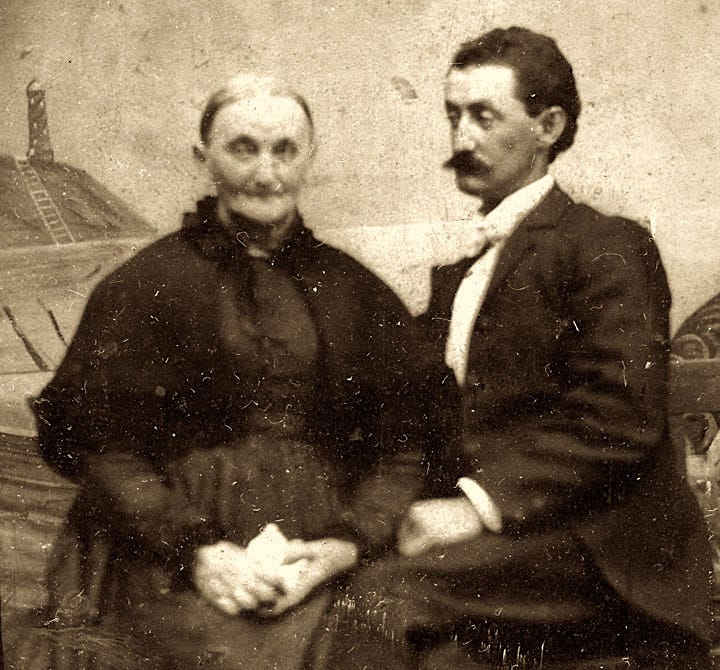
The impulse to find a way to Schoeneck reignited this year after my parents turned 90. I wanted a mini summer get-away and called my ancestry-buff cousin about a trip. She picked the weekend, and I researched a nearby campground for our families and texted a second cousin. We invited every relative we could. As plans firmed up, more and more cousins and their kids decided to come. We grew into twenty, not gathering for a funeral, but for a side trip to honor and learn about a Huguenot widow and her two sons!
That side trip in itself was another story in the making, reconnecting with the lost family historian and his sister and their friend through a church secretary, when I rediscovered, while abridging the 1907 history, that our ancestors had helped establish this church 263 years ago.
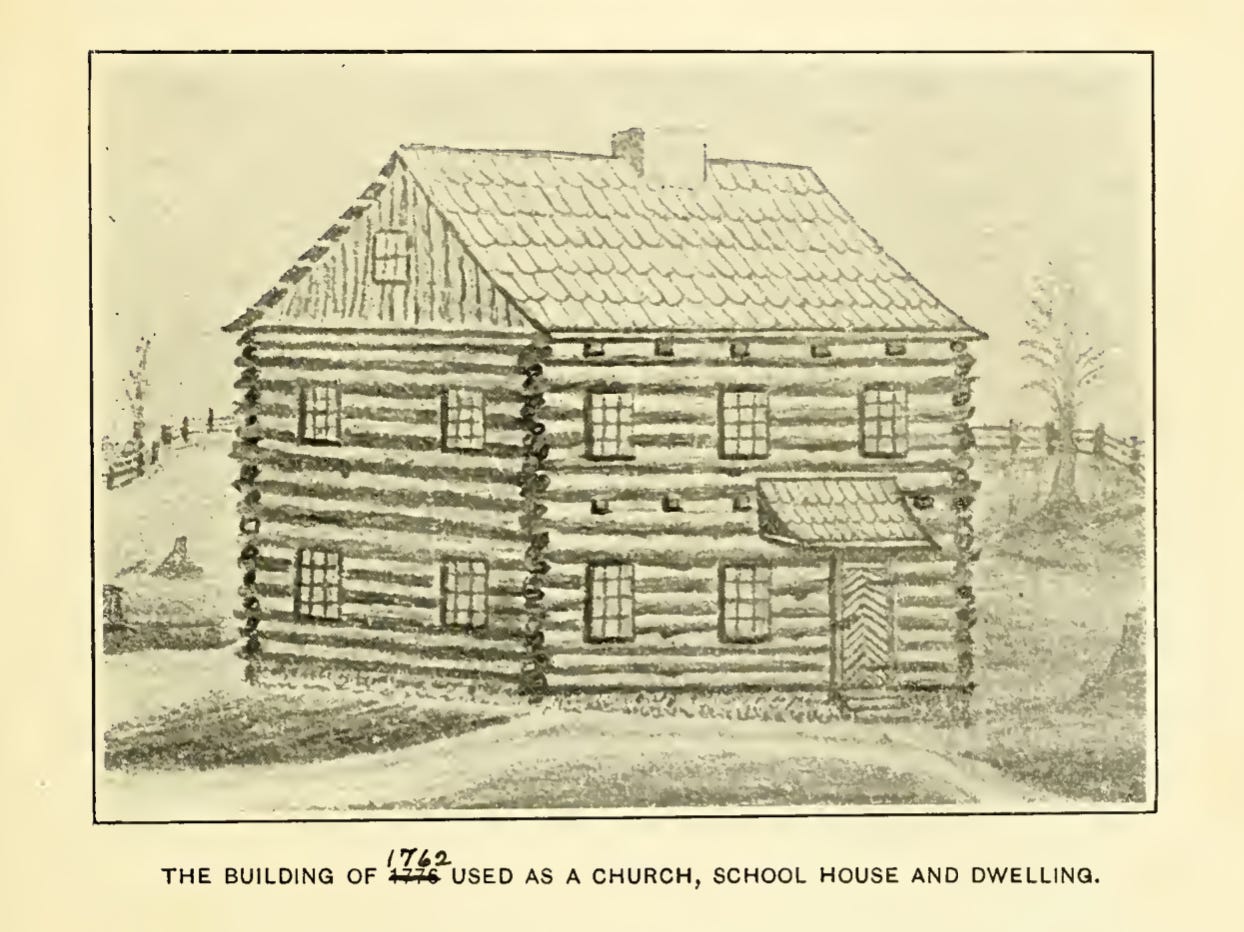
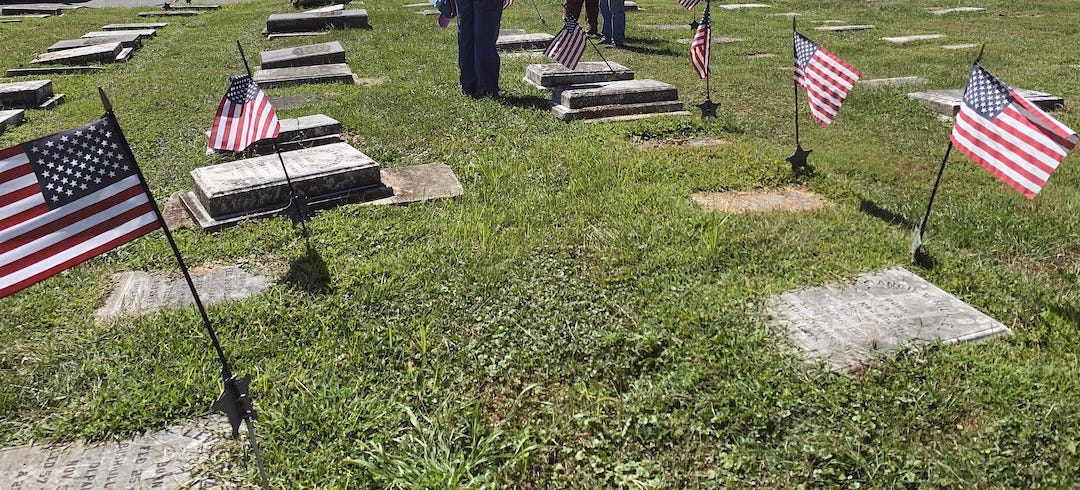
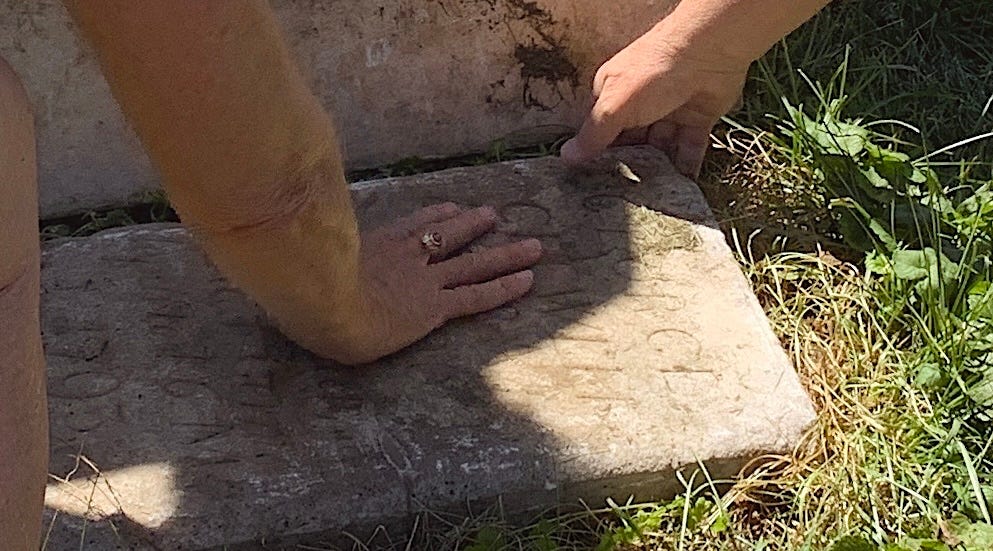
In August, our “lost branch” of the family tree was grafted back in: history became reality as we walked through the graveyard called “God’s Acre” and Schoeneck Moravian Church, and picnicked with our gracious distant relations, eight to ten generations removed, in the church pavilion. I can only imagine our living branch enlivened their own. We all learned so much from each other!
Our branch had stopped connecting when my great grandmother no longer attended reunions some time after 1904. She was an only child and had no other ties to them beyond herself and maybe some cousins.
Her identical-twin daughters, who were toddlers at that time, grew close to each other and to their own families alone. My generation of cousins and second cousins formed a tight bond every summer, staying for weeks with our twin Nanas at their summer cottage in the northern New Jersey woods, often without parents, during the 1960s. A long-ost second cousin, who came to the reunion, asked me right away “Were you there when they landed on the moon?” Indeed I was!
Now, fourteen direct descendants and their families can choose to attend these larger family reunions held on “even” years, starting next year. A side trip to the Martin Guitar factory is only a block away!
It amazes me to think that the widow Louisa and her sons Frantz and George, have living descendants of eight to ten or more generations who are willing to come long distances to visit their graves. Were they even considering how their life stories would ripple out three centuries into the future? I can’t imagine that they thought their lives were that extraordinary, but they were. I long for the ability to make their stories come alive, and wonder, what stories of my own can I possibly leave to future generations?
Twenty of us chose to be together for a weekend, not just with ourselves (an accomplishment in itself) but with strangers who are now our friends and family with a common story in our roots. My heart is full.
thank you for the invite to show some art!
This is just wonderful! So very blessed by your family history. So glad you do the work to get the history and write about it.